
Football rivalries are the heartbeat of the beautiful game, igniting passions and creating unforgettable drama. In Germany, no clash burns brighter or draws more global attention than the one between Bayern Munich and Borussia Dortmund. This isn’t just a match; it’s “Der Klassiker” – the ultimate showdown that defines German football.
The Bayern vs Dortmund rivalry transcends a mere fixture. It represents a battle for supremacy, a clash of footballing philosophies, and a cultural touchstone that captivates millions. For decades, these two titans have pushed each other to their limits, crafting a narrative rich with triumphs, heartbreaks, and legendary moments.
This comprehensive analysis delves into every facet of Der Klassiker. We will explore its origins, dissect its cultural impact, revisit historic encounters, celebrate the legends who shaped it, and examine its enduring relevance in the modern era of German football. Prepare to immerse yourself in one of Europe’s most compelling sporting sagas.
Origins of the Rivalry
While both clubs have long histories, the intense Bayern vs Dortmund rivalry we know today didn’t truly ignite until the 1990s. Before then, Bayern Munich was already establishing itself as Germany’s dominant force, while Borussia Dortmund enjoyed periods of success, but not consistently at Bayern’s level.
The roots of Der Klassiker as a true rivalry can be traced back to the mid-1990s. This era saw Borussia Dortmund emerge as a formidable challenger, breaking Bayern’s stranglehold on the Bundesliga title. Under the astute management of Ottmar Hitzfeld, Dortmund secured back-to-back Bundesliga titles in 1995 and 1996. They then shockingly triumphed in the UEFA Champions League in 1997, a feat Bayern had achieved multiple times but not recently.
This period of Dortmund’s ascendancy directly challenged Bayern’s perceived divine right to German footballing glory. The rivalry intensified as both clubs competed directly for domestic and European honors. It was no longer just two strong teams playing; it was a direct confrontation for the soul of German football.
Early Encounters and Shifting Dynamics
The very first Bundesliga encounter between the two clubs took place on October 16, 1965, with Bayern winning 2-0. For many years, matches between them were significant but lacked the “Klassiker” moniker.
- 1960s-1980s: Bayern was the dominant force, winning multiple titles. Dortmund had moments, including a DFB Pokal in 1965 and a European Cup Winners’ Cup in 1966.
- 1990s: Dortmund’s resurgence under Hitzfeld created direct competition. Their Champions League win in 1997, particularly over Bayern’s fierce rivals Schalke 04 in the semi-final, elevated their status and sharpened the competitive edge with Munich.
- Late 1990s-Early 2000s: Both clubs were consistently at the top, leading to thrilling encounters and close title races, firmly cementing the rivalry as the Bundesliga’s premier fixture.
The geographical distance between Munich in the south and Dortmund in the west also contributed to the “us vs. them” mentality. It wasn’t a local derby, but rather a clash of regional footballing pride, amplified by their contrasting club cultures.
Cultural & Social Impact
The Bayern vs Dortmund rivalry is more than a game; it’s a cultural phenomenon that permeates German society. It reflects different footballing philosophies, regional identities, and socio-economic contrasts, making it deeply ingrained in the fabric of both cities and their fan bases.
Bayern Munich, often dubbed “FC Hollywood,” represents the glitz, glamour, and financial might of Bavaria. Based in Germany’s wealthiest state, they are seen as the establishment club, consistently attracting top talent and dominating the Bundesliga with corporate precision. Their fans often embody a sense of imperial pride and expectation of victory.
Borussia Dortmund, in contrast, is the heart and soul of the Ruhrgebiet, Germany’s industrial powerhouse. BVB embodies the working-class ethos, known for its passionate, unwavering support and a footballing style often characterized by high-energy, attacking play. Their “Yellow Wall” at the Westfalenstadion is a legendary spectacle, representing pure, unadulterated fan devotion.
Fan Traditions and Atmosphere
The atmosphere surrounding Der Klassiker matches is unparalleled in German football. Home and away fans create an electrifying environment, filled with elaborate choreographies, thunderous chants, and a palpable tension that builds long before kick-off.
- The Yellow Wall (Dortmund): The Südtribüne at Signal Iduna Park is Europe’s largest standing terrace, holding over 25,000 fans. It creates an intimidating, unified force of yellow and black, often seen as the “12th man” for BVB.
- Allianz Arena (Bayern): Bayern fans, while perhaps less known for a single “wall,” fill the magnificent Allianz Arena with a sea of red. Their chants and banners reflect their club’s stature and ambition, often celebrating their numerous titles.
- Media Hype: Weeks leading up to the game, German sports media goes into overdrive. Every statement, every injury, every past encounter is dissected, fueling the anticipation and national interest.
This rivalry also highlights a crucial “transfer pipeline” phenomenon. Key players like Robert Lewandowski, Mario Götze, and Mats Hummels have controversially moved directly from Dortmund to Bayern. These transfers are often seen by Dortmund fans as a betrayal and a symbol of Bayern’s financial power undermining the competition, further intensifying the animosity.
Historic Matches & Moments
Der Klassiker has produced countless memorable encounters, often with significant implications for the title race or cup competitions. These matches are etched into the folklore of both clubs and are revisited time and again by fans and pundits alike.
Key Derbies and Iconic Results
pre 2010
- 1996 DFL-Supercup Final (Dortmund 1-0 Bayern): A crucial early victory for Dortmund during their golden era, signaling their intent to challenge Bayern’s dominance. Michael Zorc scored the decisive goal.
- 1999 Bundesliga Thriller (Bayern 2-2 Dortmund): A fiery encounter famous for the confrontation between goalkeepers Oliver Kahn (Bayern) and Jens Lehmann (Dortmund). Kahn infamously bit Heiko Herrlich and attempted to head-butt Lehmann, encapsulating the raw emotion of the rivalry.
- 2001-02 Bundesliga Decider (Bayern 1-1 Dortmund): In a tense title race, Dortmund secured a vital draw at the Olympiastadion, ultimately winning the league by a single point over Bayer Leverkusen, with Bayern finishing third.
post 2010
- 2012 DFB-Pokal Final (Dortmund 5-2 Bayern): Perhaps the most emphatic Dortmund victory in the rivalry. Jürgen Klopp’s side dismantled Bayern with a hat-trick from Robert Lewandowski, denying Jupp Heynckes’ Bayern a treble. This was a pinnacle for Klopp’s Dortmund and a bitter pill for Bayern.
- 2013 UEFA Champions League Final (Bayern 2-1 Dortmund): The ultimate stage for Der Klassiker. Wembley Stadium hosted an all-German Champions League final. Arjen Robben’s late winner secured Bayern’s fifth Champions League title, providing sweet revenge for their 2012 Pokal defeat and cementing their dominance.
- 2016 DFB-Pokal Final (Bayern 0-0 Dortmund, Bayern won 4-3 on penalties): A tactical battle that went down to penalties, highlighting the fine margins between the two teams, with Bayern ultimately prevailing.
- 2018-19 Bundesliga (Dortmund 3-2 Bayern): A thrilling encounter at Signal Iduna Park where Paco Alcácer scored a late winner for Dortmund, briefly giving them hope in the title race, though Bayern would eventually clinch it.
- 2019-20 Bundesliga (Dortmund 0-1 Bayern): A pivotal match during the COVID-19 pandemic, played behind closed doors. Joshua Kimmich’s exquisite chip proved the difference, effectively sealing another Bundesliga title for Bayern and showcasing their ability to win under pressure.
- 2022-23 Bundesliga (Dortmund 2-2 Bayern): A dramatic late equalizer from Anthony Modeste rescued a point for Dortmund, keeping the title race alive in a season where both teams faltered at times.
These matches are not just about the scoreline; they are about the narratives, the individual battles, the tactical chess games, and the sheer emotional rollercoaster they provide to fans.
Legendary Players & Managers
The Bayern vs Dortmund rivalry has been graced by some of the finest talents in world football, both on the field and in the dugout. Their contributions have shaped the rivalry’s identity and created lasting legacies.
Players Who Defined Der Klassiker
- Oliver Kahn (Bayern): The “Titan” goalkeeper, his fiery personality and immense talent made him a central figure in many Klassiker battles, embodying Bayern’s relentless winning mentality.
- Jens Lehmann (Dortmund): Kahn’s rival in goal, Lehmann was equally passionate and a formidable presence for BVB during their successful years.
- Stefan Effenberg (Bayern): The “Tiger” midfielder, known for his leadership and powerful presence, often dictated the tempo in crucial Klassiker matches.
- Matthias Sammer (Dortmund, then Bayern): A defensive lynchpin for Dortmund’s Champions League-winning side, Sammer later became Bayern’s sporting director, adding another layer to the rivalry.
- Michael Zorc (Dortmund): A true Dortmund legend, spending his entire playing career at the club and later becoming their sporting director, deeply rooted in the BVB ethos.
- Robert Lewandowski (Dortmund, then Bayern): Scored a hat-trick in the 2012 DFB-Pokal final for Dortmund against Bayern, then moved to Bayern and became their all-time leading scorer in Der Klassiker, scoring countless goals against his former club. His transfer remains one of the most impactful in the rivalry’s history.
- Mario Götze (Dortmund, then Bayern, then Dortmund): Another controversial transfer, Götze scored the winning goal for Germany in the 2014 World Cup, but his club career was deeply intertwined with both rivals.
- Mats Hummels (Bayern, then Dortmund, then Bayern): Hummels’ journey between the two clubs, often seen as a “traitor” by sections of both fanbases at different times, highlights the intense feelings surrounding player movements.
- Marco Reus (Dortmund): A loyal servant and captain for BVB, Reus has consistently been Dortmund’s talisman in Der Klassiker, often scoring vital goals and embodying the club’s fighting spirit.
- Thomas Müller (Bayern): The “Raumdeuter” has been a constant presence for Bayern, consistently performing in big games and often scoring against Dortmund.
Managers Who Shaped the Showdown
- Ottmar Hitzfeld (Dortmund, then Bayern): The “General” led Dortmund to their greatest successes in the 90s, then moved to Bayern and continued his trophy-laden career, making him a unique figure in the rivalry.
- Jürgen Klopp (Dortmund): Klopp’s charismatic leadership and “Gegenpressing” philosophy revitalized Dortmund, leading them to back-to-back Bundesliga titles and challenging Bayern’s supremacy in style. He made Dortmund a force to be reckoned with again.
- Jupp Heynckes (Bayern): A legendary Bayern coach across multiple stints, he often found ways to overcome Dortmund’s challenges, famously guiding Bayern to the treble in 2013, including the Champions League final victory over BVB.
- Pep Guardiola (Bayern): His tactical prowess ensured Bayern maintained their dominance, often outmaneuvering Dortmund in league encounters.
These individuals, through their skill, passion, and often controversial decisions, have woven a rich tapestry of stories into the fabric of Der Klassiker.
Statistics & Records
The numbers behind the Bayern vs Dortmund rivalry tell a story of consistent competition, but ultimately, Bayern Munich’s sustained dominance. Analyzing these statistics provides a clear picture of the historical power balance.
Head-to-Head Record (All Competitions – Approximate as of early 2024)
Across all competitive matches, including Bundesliga, DFB-Pokal, DFL-Supercup, and Champions League:
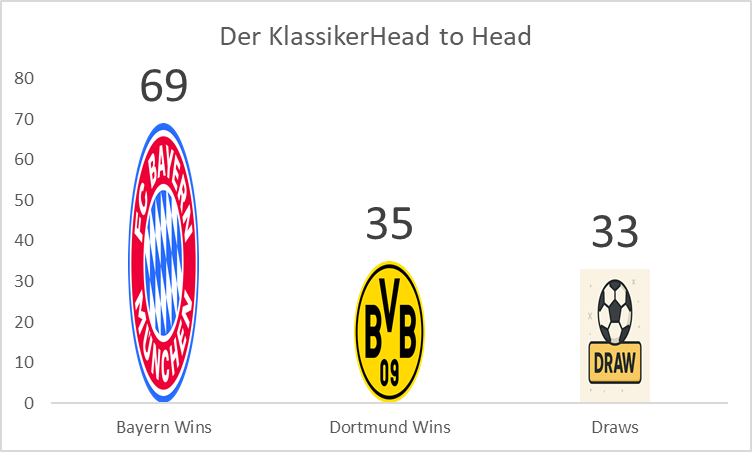
Statistical Analysis: Bayern Munich holds a significant advantage in the head-to-head record, winning roughly twice as many matches as Borussia Dortmund. This highlights Bayern’s historical consistency and ability to perform in crucial encounters, especially in the modern era.
Bundesliga Records
- Most Bundesliga Titles: Bayern Munich (34) vs. Borussia Dortmund (8)
- Largest Winning Margin (Bayern): Bayern 11-1 Dortmund (1971)
- Largest Winning Margin (Dortmund): Dortmund 5-0 Bayern (1966)
- Most Goals Scored in Bundesliga (Player): Robert Lewandowski (Bayern) – 20 goals vs. Dortmund (across both clubs, but predominantly for Bayern against BVB).
- Most Appearances (Player): Thomas Müller (Bayern) – 30+ appearances in Der Klassiker.
Trophy Cabinet Comparison
| Trophy | Bayern Munich | Borussia Dortmund |
|---|---|---|
| Bundesliga | 34 | 8 |
| DFB-Pokal | 20 | 5 |
| Champions League | 3 | 1 |
| FIFA Club World Cup | 2 | 1 |
| UEFA Super Cup | 2 | 0 |
Statistical Analysis: The trophy comparison clearly illustrates Bayern Munich’s status as Germany’s undisputed record champion. While Dortmund has enjoyed periods of significant success, particularly in the 1990s and under Jürgen Klopp, Bayern’s sustained excellence across decades gives them a vast advantage in silverware.
Recent Trends (Past 5-10 Years)
In the last decade, Bayern Munich has largely dominated Der Klassiker. While Dortmund often provides thrilling matches and occasional upsets, Bayern has consistently had the upper hand, especially in Bundesliga fixtures, often winning convincingly. This period has seen Bayern clinch numerous Bundesliga titles, often at Dortmund’s expense or by beating them directly in key matches.
The “transfer pipeline” has also played a role, with Bayern weakening Dortmund by acquiring their star players, which has arguably contributed to Bayern’s continued statistical superiority in the rivalry.
The Modern Era
The modern era of the Bayern vs Dortmund rivalry continues to be defined by Bayern Munich’s domestic supremacy, yet Borussia Dortmund remains their most credible, albeit inconsistent, challenger. The dynamics have shifted, but the passion and global interest endure.
Current Dynamics and Recent Encounters
In recent years, Bayern Munich has maintained a firm grip on the Bundesliga title, securing eleven consecutive championships from 2013 to 2023. During this period, Dortmund has often been the “best of the rest,” finishing as runners-up multiple times but struggling to consistently overcome Bayern when it matters most.
Recent Klassiker matches, particularly in the Bundesliga, have frequently seen Bayern emerge victorious. The scores have often been decisive, showcasing Bayern’s superior squad depth and clinical execution. For instance, the 2022-23 season saw Bayern win the first Klassiker 4-2 at home and then draw 2-2 away after a late Dortmund comeback. The 2023-24 season’s first league encounter saw Bayern triumph 4-0 at Signal Iduna Park, further emphasizing their current dominance.
Despite these results, the matches themselves are rarely dull. They are typically high-scoring affairs, characterized by intense pressing, rapid transitions, and individual brilliance. Dortmund’s tactical approach often involves trying to outrun and outwork Bayern, while Bayern relies on their world-class talent and tactical flexibility.
Impact of Financial Disparity and Transfer Policy
A significant factor in the modern rivalry is the growing financial disparity between the two clubs. Bayern Munich’s robust commercial revenues allow them to retain top talent and recruit from rivals, including Dortmund. This has led to a “transfer pipeline” where key Dortmund players (Lewandowski, Götze, Hummels) have moved to Munich, often weakening Dortmund’s title challenges.
Dortmund, on the other hand, operates with a different model, focusing on developing young talent (e.g., Jadon Sancho, Erling Haaland, Jude Bellingham) and selling them for significant profits. While this keeps the club financially healthy, it often means they lose their best players just as they reach their peak, making it harder to build a sustained challenge against Bayern.
Global Relevance
Der Klassiker has transcended German borders to become a truly global event. The attacking football, the passionate fan bases, and the presence of world-renowned stars ensure that the match draws massive international viewership, solidifying its status as one of Europe’s premier footballing spectacles, alongside El Clásico and the North West Derby.
The Future of the Rivalry
The future of the Bayern vs Dortmund rivalry remains as compelling as its past. While Bayern Munich currently holds a significant advantage, the unpredictable nature of football, coupled with Dortmund’s enduring ambition, suggests that Der Klassiker will continue to be a focal point of German football.
Challenges for Dortmund
For Borussia Dortmund to consistently challenge Bayern’s hegemony, they face several key challenges:
- Player Retention: Finding a way to keep their star players for longer periods, or at least ensuring that replacements can hit the ground running, is crucial.
- Tactical Consistency: Maintaining a high level of performance throughout an entire season, especially against smaller teams, is vital to stay in the title race.
- Mental Fortitude: Overcoming the psychological barrier of playing against Bayern, particularly at the Allianz Arena, will be essential.
Dortmund’s commitment to developing young talent, however, means they will always remain a dangerous and exciting team capable of producing moments of brilliance and surprise victories.
Bayern’s Continued Evolution
Bayern Munich, despite their dominance, is not immune to challenges. They constantly need to rejuvenate their squad, adapt to new tactical trends, and manage the high expectations that come with their status. The emergence of other Bundesliga teams, while not yet a consistent threat, could also add another layer of competition.
Long-Term Significance
Regardless of who holds the upper hand in any given season, Der Klassiker’s significance is unlikely to wane. It is the fixture that most reliably delivers drama, high-quality football, and intense emotional investment from fans. The narrative of the established powerhouse against the passionate challenger is timeless and universally appealing.
As new generations of players and managers step onto the pitch, they will inherit a rivalry steeped in history. Each match will add another chapter, further cementing the legacy of this iconic German showdown.
Conclusion
The Bayern vs Dortmund rivalry, affectionately known as Der Klassiker, stands as the undisputed pinnacle of German football. It is a rivalry forged in the fires of direct competition, fueled by contrasting identities, and sustained by an endless stream of unforgettable matches and legendary figures.
From the early challenges of the 1990s to the intense tactical battles and high-scoring affairs of the modern era, this rivalry has consistently delivered on its promise of drama and excitement. While statistics may point to Bayern Munich’s historical dominance, Borussia Dortmund’s unwavering spirit and passionate support ensure that every encounter remains a must-watch spectacle.
Der Klassiker is more than just a football match; it’s a cultural touchstone that encapsulates the very best of German football. It represents the clash of titans, the pursuit of excellence, and the enduring power of fan loyalty. As long as these two clubs exist, the Bayern vs Dortmund rivalry will continue to captivate audiences worldwide, reminding us why we love the beautiful game.

