
Football rivalries are the lifeblood of the beautiful game, igniting passions and shaping identities. Among Spain’s most fervent local clashes, the “Derbi Barceloní” stands out. This intense showdown pits FC Barcelona against RCD Espanyol, two clubs from the same vibrant city, but with vastly different histories and philosophies.
More than just a geographical proximity, the Barcelona vs Espanyol rivalry embodies a complex interplay of sporting ambition, cultural identity, and socio-political undertones. While often overshadowed by the global spectacle of El Clásico, the Derbi Barceloní possesses a unique flavor and a deep-rooted significance for the people of Catalonia.
This long-form analysis will delve into every facet of this fascinating rivalry. We will explore its origins, dissect its cultural impact, revisit legendary moments, and examine the statistics that tell a story of dominance and defiant resistance. Join us as we unpack why this derby, despite its often one-sided nature on the pitch, remains a vital fixture in Spanish football.
Origins of the Derbi Barceloní Rivalry
The seeds of the Barcelona vs Espanyol rivalry were sown at the very beginning of the 20th century, reflecting the burgeoning social and political landscape of Catalonia. Their foundings, just two years apart, set them on distinct trajectories that would define their identities for over a century.
FC Barcelona: The Catalan Standard Bearer
Founded in 1899 by a group of Swiss, English, and Catalan footballers, FC Barcelona quickly became more than just a sports club. It evolved into a powerful symbol of Catalan identity and self-determination. “Més que un club” (More than a club) became its enduring motto, encapsulating its role as a cultural and political touchstone, particularly during periods of oppression.
Barça was seen as the club of the people, embracing progressive ideals and representing a distinct regional identity within Spain. Its growth mirrored the rise of Catalan nationalism, fostering a deep connection with its fan base that transcended mere sporting allegiance.
RCD Espanyol: The Royalist Counterpart
In contrast, Real Club Deportivo Espanyol was founded in 1900 by a group of Spanish university students. Their initial aim was to promote football exclusively among Spanish nationals, a direct counterpoint to Barcelona’s more international origins. Espanyol quickly became associated with Spanish nationalism and the central government in Madrid.
The “Royal” title, granted in 1912 by King Alfonso XIII, solidified its image as the club of the Spanish monarchy and establishment in Catalonia. This fundamental ideological difference – Catalan identity versus Spanish identity – became the bedrock of the rivalry, creating a divide that went far beyond the pitch.
Early Encounters and Divergent Paths
The first official match between the two clubs took place in 1900, a friendly that set the stage for countless future battles. From the outset, the clubs represented different social strata and political leanings. Barcelona attracted a broader, often more working-class and nationalist support base, while Espanyol drew support from those who identified more with Spanish unity and the established order.
This historical context is crucial for understanding why the Barcelona vs Espanyol rivalry, despite its statistical imbalance, has always carried a unique weight. It is a clash of two visions for Catalonia, played out on the football field.
Cultural & Social Impact of Derbi Barceloní
The Derbi Barceloní is deeply embedded in the cultural and social fabric of Barcelona and Catalonia. It provides a mirror to the region’s complex identity, where football becomes a powerful expression of belonging and belief.
A Reflection of Catalan Identity
For many, the rivalry is a sporting manifestation of the broader political and cultural tensions within Catalonia. FC Barcelona embodies the aspirations of Catalan independence and cultural distinctiveness. Its matches are often accompanied by displays of the “Senyera” (Catalan flag) and chants for independence.
Espanyol, on the other hand, represents the segment of the Catalan population that identifies strongly with Spain. Its fans often wave the Spanish flag alongside their club colors. This dual identity within a single city ensures that the derby is never just about three points; it’s about pride, identity, and the very soul of Catalonia.
Fan Traditions and Atmosphere
The atmosphere surrounding the Derbi Barceloní is distinct. While perhaps not as overtly hostile as some other European derbies, it is charged with a palpable tension and deep-seated animosity. Espanyol fans, despite being the smaller group, are known for their fierce loyalty and passionate support, particularly when facing their illustrious neighbors.
At the RCDE Stadium (formerly Estadi Cornellà-El Prat), the “Pericos” (Espanyol’s nickname, meaning “parakeets”) create a cauldron of noise, often directing pointed chants at their rivals. Camp Nou, while larger, also sees a heightened sense of anticipation and rivalry when Espanyol comes to visit, albeit often with a touch of condescension from the dominant home support.
- Chants and Banners: Both sets of fans use creative and often provocative chants and banners to underscore their identities and mock their rivals.
- Local Pride: For Espanyol supporters, winning the derby is often seen as a “title” in itself, a moment of immense satisfaction against overwhelming odds.
- Family Divides: The rivalry can even split families and friendships within Barcelona, adding a personal layer to the city-wide contest.
Socio-Economic Dynamics
Historically, there was a perception of socio-economic differences between the two fan bases. Barcelona was often associated with the working class and the intellectual elite who championed Catalan nationalism, while Espanyol was seen as the club of the more conservative, Spanish-leaning middle and upper classes. While these distinctions have blurred significantly over time, the historical narrative still plays a role in the rivalry’s cultural impact.
Derbi Barceloní Historic Matches & Moments
Despite Barcelona’s overall dominance, the Derbi Barceloní has produced numerous unforgettable matches, dramatic upsets, and moments of individual brilliance. These encounters have shaped the narrative of the rivalry and cemented its place in football folklore.
Early Dominance and Shocks
FC Barcelona quickly established itself as the more successful club, but Espanyol always relished the opportunity to upset their powerful neighbors. Early derbies were often fiercely contested, with Espanyol’s occasional victories celebrated with immense fervor, seen as triumphs against a perceived establishment.
The “Tamudazo” (2007)
Perhaps one of the most iconic moments in the rivalry’s recent history is the “Tamudazo” on June 9, 2007. In the penultimate game of the 2006-07 La Liga season, Espanyol striker Raúl Tamudo scored a dramatic late equalizer against Barcelona at Camp Nou. The match ended 2-2.
This single goal proved pivotal. It allowed Real Madrid to overtake Barcelona on head-to-head record, ultimately costing Barça the La Liga title. For Espanyol fans, it was a moment of unparalleled joy and a testament to their ability to directly influence the championship race, even if not for themselves.
Espanyol’s Rare Camp Nou Victory (2009)
In February 2009, Espanyol achieved a remarkable 2-1 victory at Camp Nou, a result that sent shockwaves through Spanish football. Under Mauricio Pochettino, the “Pericos” delivered a stunning performance, with Iván de la Peña scoring both goals. This was Espanyol’s first win at their rival’s stadium in 27 years, a truly historic upset during Pep Guardiola’s treble-winning season.
Record Scorelines
- Barcelona’s Largest Win: FC Barcelona has inflicted several heavy defeats on Espanyol, including an 8-0 victory in the 1935-36 Copa del Rey and a 5-0 win in La Liga on multiple occasions (most recently in 2015-16).
- Espanyol’s Largest Win: Espanyol’s most significant victories include a 6-0 thrashing in 1951 and a 4-0 win in 1930, showcasing their historical capacity for dominance in specific encounters.
These moments highlight the emotional rollercoaster of the Derbi Barceloní. While one side has enjoyed consistent success, the other has always found ways to deliver memorable blows, ensuring the rivalry remains vibrant and unpredictable on occasion.
Legendary Players & Managers
Over the decades, countless talented individuals have graced the Derbi Barceloní. Some have become synonymous with one club, while a select few have even crossed the divide, adding another layer of intrigue to the rivalry.
FC Barcelona Icons
FC Barcelona’s long list of legends includes many who left an indelible mark on the Derbi Barceloní.
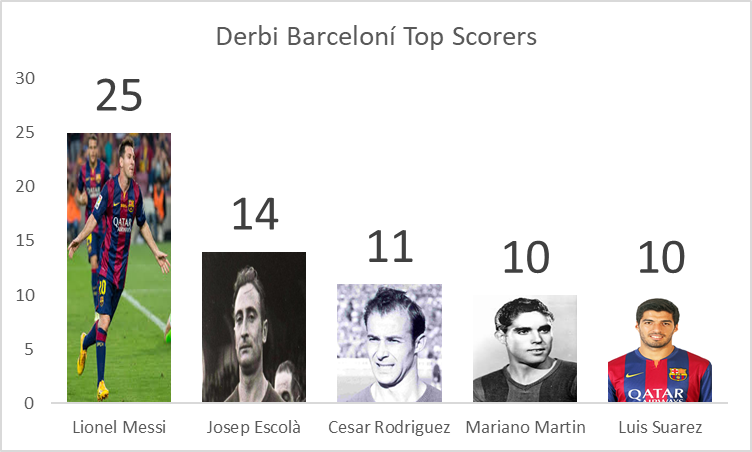
- Lionel Messi: Unsurprisingly, Messi is the all-time top scorer in the Derbi Barceloní, with a staggering 25 goals in 35 appearances. His performances often decided these clashes, with his incredible skill and goal-scoring prowess consistently proving too much for Espanyol.
- César Rodríguez: A prolific striker from the 1940s and 50s, César held the record for most goals in the derby for many years before Messi.
- Xavi Hernández & Andrés Iniesta: These midfield maestros controlled countless derbies, dictating the tempo and providing the creative spark for Barcelona’s dominance.
- Johan Cruyff: As both a player and manager, Cruyff’s philosophy and influence shaped Barcelona’s identity, including their approach to local rivalries.
RCD Espanyol Heroes
Espanyol’s legends are revered for their loyalty and their moments of brilliance against their giant neighbors.
- Raúl Tamudo: The archetypal “Perico”, Tamudo is Espanyol’s all-time leading scorer and a true derby legend. His “Tamudazo” goal against Barcelona in 2007 is etched into the club’s history and remains one of the most celebrated moments for Espanyol fans. He scored 13 goals against Barcelona.
- Dani Jarque: A beloved captain and central defender, Jarque tragically passed away in 2009. He epitomized the spirit and dedication of Espanyol and is remembered fondly by both sets of fans.
- Mauricio Pochettino: As both a player and manager for Espanyol, Pochettino understood the rivalry deeply. His tactical acumen led to that famous 2-1 victory at Camp Nou in 2009, a testament to his understanding of the club’s spirit.
Players Who Crossed the Divide
While rare, some players have represented both clubs, often to the ire of one or both fan bases. The most famous example is Ricardo Zamora, considered one of Spain’s greatest goalkeepers. He played for Espanyol (1916-1919, 1922-1930) and Barcelona (1919-1922). His move from Espanyol to Barcelona was particularly controversial at the time. Other notable players include Ernesto Valverde (played for Espanyol, managed Barcelona) and Philippe Coutinho (briefly played for Espanyol on loan before Barcelona).
Derbi Barceloní Statistics & Records
The statistics of the Derbi Barceloní paint a clear picture of FC Barcelona’s historical dominance, but also highlight Espanyol’s resilience and occasional ability to cause an upset.
Head-to-Head Record
Across all official competitions (La Liga, Copa del Rey, etc.), the Derbi Barceloní has been played over 200 times. The general breakdown is as follows:
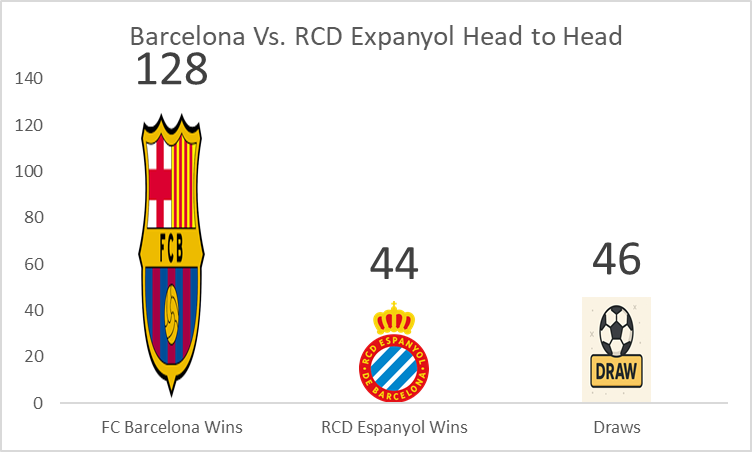
This data clearly illustrates Barcelona’s significant upper hand, winning nearly three times as many derbies as Espanyol.
La Liga Specifics
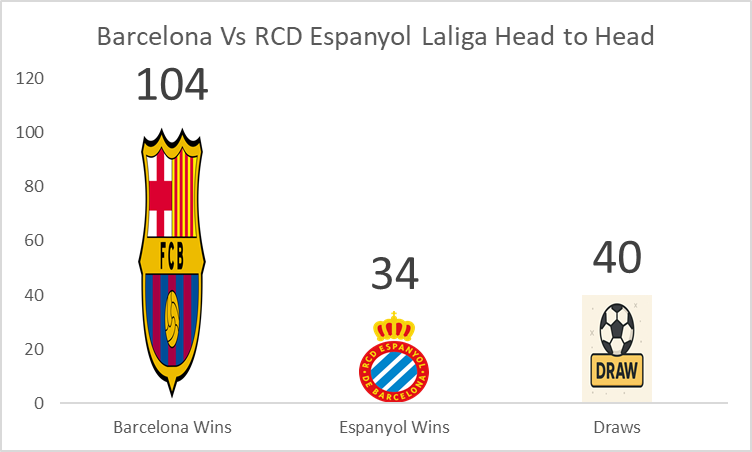
In La Liga alone, the disparity is also stark:
Trophies Won
The trophy cabinets of the two clubs further emphasize the gulf in success:
- FC Barcelona: One of the most decorated clubs in world football, with numerous La Liga titles, Copa del Rey trophies, UEFA Champions League titles, and other domestic and international honors. (e.g., 27 La Liga titles, 31 Copa del Rey, 5 Champions League titles).
- RCD Espanyol: While a respected club, their trophy haul is considerably smaller, consisting primarily of four Copa del Rey titles (1929, 1940, 2000, 2006). They have also been UEFA Cup/Europa League finalists twice.
This vast difference in silverware underscores the narrative of the rivalry: a global giant against a proud local club fighting for every inch.
Top Scorers in the Derby
Most Appearances
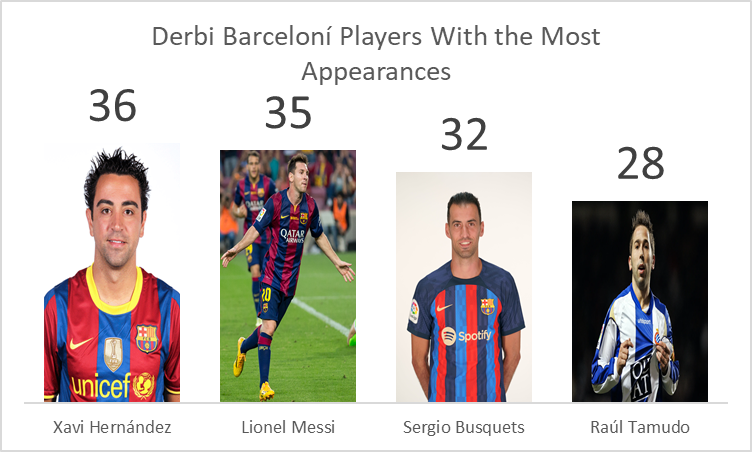
These statistics illustrate a rivalry where one club has consistently outperformed the other, yet the underdog’s occasional triumphs resonate deeply within its fan base, highlighting moments of defiance against the odds.
The Modern Era
The dynamics of the Derbi Barceloní in the modern era have largely been defined by FC Barcelona’s continued global ascendancy and Espanyol’s struggles to maintain a consistent presence in La Liga. This has undeniably impacted the frequency and intensity of the rivalry.
Barcelona’s Unwavering Dominance
In the 21st century, particularly during the Lionel Messi era, FC Barcelona’s dominance in the derby reached unprecedented levels. They consistently secured victories, often with comfortable margins, showcasing their superior talent and tactical prowess. The gap in quality and resources between the two clubs widened significantly.
Recent encounters have frequently seen Barcelona emerge victorious. For example, in the 2022-23 season, Barcelona won the crucial derby 4-2 at Espanyol’s home ground, a result that mathematically secured their La Liga title. This match encapsulated the modern dynamic: Barcelona celebrating major success at the expense of their local rivals.
Espanyol’s Relegations and Promotion Battles
A significant factor affecting the modern Derbi Barceloní is Espanyol’s battle with relegation. They were relegated from La Liga at the end of the 2019-2020 season, returning for 2021-2022, but then suffered another relegation in 2022-2023.
These spells in the Segunda División mean the derby does not occur every season, diminishing its regularity and, for some, its immediate relevance. For Espanyol fans, the focus shifts to securing promotion back to the top flight, a prerequisite for rekindling the rivalry’s traditional intensity.
Statistical Analysis of Recent Trends
Analyzing the last 10-15 years of derbies reveals a clear trend:
- Barcelona Wins: A vast majority of matches have ended in Barcelona victories.
- Espanyol Wins: Extremely rare, often celebrated like a trophy when they occur.
- Draws: More common than Espanyol wins, but still infrequent.
- Goal Difference: Barcelona has consistently outscored Espanyol by significant margins in recent years, highlighting the attacking disparity.
This statistical imbalance has led to discussions about whether the rivalry has lost some of its competitive edge. However, for the fans, the historical and cultural significance ensures that every derby, regardless of recent form, remains a crucial event.
The Future of Derbi Barceloní
The future of the Derbi Barceloní hinges significantly on RCD Espanyol’s ability to establish itself consistently in La Liga. Without regular top-flight encounters, the rivalry risks losing some of its contemporary bite, even if its historical importance remains.
Espanyol’s Fight for La Liga Status
Espanyol’s immediate future is centered on securing promotion from the Segunda División. A return to La Liga would immediately restore the annual derby fixtures, allowing the rivalry to regain its regular platform. The “Pericos” faithful yearn for these matches, not just for the sporting contest, but for the expression of their club’s identity against their more illustrious neighbors.
Should Espanyol return, the intensity would undoubtedly spike. Any points taken from Barcelona, especially in a title race, would be celebrated with renewed vigor.
New Narratives and Emerging Talents
As football evolves, so too will the narratives of its rivalries. New generations of players will emerge, each bringing their own stories and ambitions to the Derbi Barceloní. The departure of long-standing figures like Lionel Messi from Barcelona also opens the door for other players to step up and define their own derby legacies.
The rivalry will continue to be a proving ground for young talents from both academies, offering them a unique opportunity to make a name for themselves in a high-stakes local clash.
Enduring Cultural Significance
Regardless of short-term sporting fortunes, the cultural and social significance of the Barcelona vs Espanyol rivalry is unlikely to wane. It is too deeply intertwined with the identity of Barcelona and Catalonia.
The ideological divide, while perhaps less overtly political in everyday football discourse, still simmers beneath the surface. For the fans, the derby remains a vital expression of local pride and belonging, an unmissable event that transcends league positions or recent results.
The Derbi Barceloní will continue to be a fixture that captures the imagination, a testament to the enduring power of local football rivalries to tell a story far greater than the game itself.
Conclusion
The Derbi Barceloní, the fierce Barcelona vs Espanyol rivalry, is a compelling narrative woven into the fabric of Spanish football. It is a rivalry born from divergent origins, shaped by contrasting ideologies, and sustained by the unwavering passion of its supporters. While FC Barcelona has largely dominated on the pitch, the spirit of RCD Espanyol has consistently provided moments of defiance, proving that passion and local pride can challenge even the greatest of teams.
From the foundational differences in their identities – Barcelona as a symbol of Catalan nationalism and Espanyol as a representative of Spanish unity – to the iconic “Tamudazo” and rare upsets at Camp Nou, this derby is rich with history and cultural weight. It reflects the complex tapestry of Catalonia itself, where two distinct identities coexist and clash on the football field.
Despite Espanyol’s recent relegations, the enduring significance of the Derbi Barceloní remains. It is a reminder that football is more than just a game; it is a profound expression of community, history, and belonging. As Espanyol battles for a return to La Liga, the prospect of rekindling this passionate local rivalry is eagerly anticipated by fans of both clubs. The Derbi Barceloní will always be a special fixture, a testament to the enduring power of football to encapsulate a city’s soul and its competing loyalties.

