
In the world of football, few fixtures command the global attention, passion, and historical weight quite like El Clásico. More than just a game, the fierce rivalry between Real Madrid and Barcelona is a cultural phenomenon, a political statement, and a clash of titans that transcends the boundaries of sport. For decades, this epic encounter has captivated billions, showcasing the pinnacle of footballing talent and igniting unparalleled emotions.
This comprehensive deep dive into El Clasico history will explore every facet of this legendary rivalry. From its complex origins rooted in Spain’s socio-political landscape to the iconic players and unforgettable moments that have shaped its narrative, we unravel why Real Madrid vs Barcelona remains the most compelling spectacle in football. Prepare to journey through the annals of time, statistics, and pure sporting drama that define this eternal battle.
Image Source: here
Origins of the Rivalry
The seeds of the Real Madrid vs Barcelona rivalry were sown long before the modern era of football. Their roots delve deep into the socio-political fabric of Spain, representing more than just two competing football clubs. They embody contrasting regional identities and political ideologies that have historically clashed.
The Early Days & Regional Identities
Both clubs were founded in the early 20th century, Barcelona in 1899 and Real Madrid in 1902. From the outset, they represented distinct regional identities. Real Madrid, based in the capital, became a symbol of Spanish centralism and the established monarchy. Conversely, FC Barcelona quickly evolved into a powerful emblem of Catalan nationalism, a region with a distinct language and culture that often felt marginalized by the central government.
This inherent tension between the “capital” and the “periphery” provided a ready-made narrative for competition. Every match became a proxy battle, a chance for regional pride to assert itself on a national stage.
The Franco Era & Political Symbolism
The Spanish Civil War (1936-1939) and the subsequent dictatorship of General Francisco Franco intensified the political dimensions of the rivalry. Under Franco”s regime, Catalan identity and language were suppressed. FC Barcelona, with its motto “Més que un club” (More than a club), became a crucial symbol of resistance and a rallying point for Catalan identity.
Real Madrid, on the other hand, was often perceived as the regime”s favored club, especially during their dominant European Cup years in the 1950s and 60s. While historical accounts suggest the relationship between Real Madrid and Franco”s regime was complex, the popular perception of Real Madrid as the “establishment” club and Barcelona as the “rebel” club became ingrained, adding profound depth to the El Clasico history.
The Alfredo Di Stéfano Transfer Saga
Perhaps no single event cemented the bitterness of the rivalry more than the controversial transfer of Alfredo Di Stéfano in 1953. Both clubs vied for the Argentine superstar, then playing for Colombian club Millonarios. A convoluted series of events, involving the Spanish Football Federation and FIFA, resulted in a bizarre agreement: Di Stéfano would play alternate seasons for each club.
Barcelona, feeling cheated and under pressure, eventually withdrew from the agreement, allowing Di Stéfano to sign solely for Real Madrid. He went on to lead Real Madrid to five consecutive European Cups, a period of unprecedented dominance that Barcelona fans attributed directly to the perceived unfairness of his transfer. This incident remains a potent symbol of the deep-seated resentment and competitive fire that fuels the Real Madrid vs Barcelona rivalry.
Cultural & Social Impact
The Real Madrid vs Barcelona rivalry transcends the football pitch, deeply embedding itself within the cultural and social fabric of Spain and beyond. It”s a rivalry that shapes identities, fuels conversations, and even influences national moods.
A Clash of Identities: Catalonia vs. Spain
For many, particularly in Catalonia, supporting Barcelona is synonymous with supporting Catalan identity and, for some, the push for independence. The club”s colors, flag, and anthems are all deeply intertwined with regional pride. Conversely, Real Madrid supporters often see their club as a representation of Spain”s unity and national prestige.
This deep-seated cultural divide means that every El Clásico is not just a football match, but a symbolic contest of ideologies. The outcome can lead to jubilant celebrations of regional pride or a somber reflection of perceived dominance.
Fan Traditions and Atmosphere
The atmosphere at an El Clásico, whether at Real Madrid”s Santiago Bernabéu or Barcelona”s Camp Nou, is unlike any other. Weeks before the match, the cities buzz with anticipation. On match day, the stadiums become cauldrons of noise, color, and passion.
- Choreographed Tifos: Fans from both sides often create spectacular pre-match displays, known as tifos, covering entire stands with giant banners and mosaics that depict club legends, historical moments, or provocative messages aimed at the opposition.
- Chants and Anthems: The air is filled with passionate chants, often political in nature, and the singing of club anthems. “Cant del Barça” and “Hala Madrid y nada más” are sung with fervent devotion, echoing through the stands.
- Global Reach: The rivalry”s cultural impact extends globally. Millions of fans in every corner of the world tune in, creating a shared experience that unites diverse communities under the banner of their chosen club.
Impact on Spanish Society
El Clásico is a major talking point in Spanish society for days, if not weeks. It dominates sports headlines, fuels debates in bars and homes, and even influences political discourse. The results can be seen as indicators of national mood or perceived shifts in power dynamics between regions.
For many, the rivalry is a fundamental part of growing up in Spain. Families are often split, with siblings or parents supporting opposing teams, leading to friendly (and sometimes not-so-friendly) banter. It”s a shared national experience that, despite its intensity, often unites people in their love for the beautiful game.
Historic Matches & Moments
Over a century of competition has produced countless unforgettable El Clásico encounters, each etching itself into the rich El Clasico history. These matches are not just about goals; they are about drama, controversy, individual brilliance, and defining eras.
Early Dominance & Iconic Thrashings
- Real Madrid 11-1 Barcelona (Copa del Generalísimo, 1943): This infamous match, played during the Franco era, remains the biggest margin of victory in El Clásico history. Barcelona players reportedly faced threats before the game, leading to a highly controversial and often-debated result.
- Barcelona 5-0 Real Madrid (La Liga, 1974): Johan Cruyff”s arrival at Barcelona heralded a new era. His masterful performance, including a famous goal, led to a stunning 5-0 victory at the Bernabéu, a result that became a symbol of Catalan pride and a shift in power.
The “Manitas” and Figo”s Return
- Barcelona 5-0 Real Madrid (La Liga, 1994): Under Cruyff”s management, Romário scored a hat-trick in another emphatic 5-0 victory, cementing Barcelona”s “Dream Team” status.
- Real Madrid 5-0 Barcelona (La Liga, 1995): Real Madrid exacted revenge just a year later, with a 5-0 win of their own, featuring a hat-trick from Chilean striker Iván Zamorano, under the guidance of Jorge Valdano.
- The “Pig”s Head” Incident (Camp Nou, 2002): Luís Figo”s controversial move from Barcelona to Real Madrid in 2000 made him a pariah in Catalonia. His return to Camp Nou in 2002 was met with an unprecedented hostile reception, with objects, including a pig”s head, thrown onto the pitch as he took corners. It remains one of the most iconic and intense moments in the Real Madrid vs Barcelona rivalry.
Messi, Ronaldo, and Modern Classics
- Real Madrid 0-3 Barcelona (La Liga, 2005): Ronaldinho”s mesmerizing performance at the Bernabéu was so spectacular that even Real Madrid fans stood up to applaud his second goal, a rare moment of cross-rivalry appreciation.
- Real Madrid 2-6 Barcelona (La Liga, 2009): Pep Guardiola”s Barcelona delivered a footballing masterclass, humiliating Real Madrid at their home ground with a dominant 6-2 victory. This match cemented Barcelona”s status as arguably the greatest club side ever.
- Barcelona 5-0 Real Madrid (La Liga, 2010): Another “Manita” for Barcelona, this time in José Mourinho”s first Clásico as Real Madrid manager. It was a tactical and technical triumph for Guardiola”s side, considered one of their most complete performances.
- Real Madrid 2-3 Barcelona (La Liga, 2017): Lionel Messi”s injury-time winner at the Bernabéu, followed by his iconic shirt celebration to the Real Madrid faithful, is a defining image of his incredible rivalry with Cristiano Ronaldo.
Legendary Players & Managers
The intensity of the Real Madrid vs Barcelona rivalry has been amplified by the presence of football”s greatest talents. These individuals, through their skill, passion, and often their controversial transfers, have carved their names into El Clasico history.
Real Madrid Icons
- Alfredo Di Stéfano: The “Blond Arrow” was the catalyst for Real Madrid”s dominance in the 1950s. His transfer saga and subsequent performances made him a legendary figure and a symbol of the rivalry”s early bitterness.
- Ferenc Puskás: A prolific goalscorer and a key member of the legendary Real Madrid team of the 50s and 60s, he consistently delivered in big games.
- Raúl González: A home-grown hero, Raúl embodied the spirit of Real Madrid. His dedication and goal-scoring prowess made him a fan favorite and a constant threat in El Clásico.
- Zinedine Zidane: As a player, his elegance and crucial goals defined an era. As a manager, he led Real Madrid to three consecutive Champions League titles, often navigating successful Clásico outcomes.
- Cristiano Ronaldo: The ultimate goal machine for Real Madrid, his personal rivalry with Lionel Messi elevated El Clásico to unprecedented global heights. His incredible scoring record in these matches is testament to his greatness.
- Sergio Ramos: The iconic captain, known for his leadership, last-minute goals, and fiery temperament. He was often at the heart of the most intense Clásico battles.
Barcelona Legends
- Ladislao Kubala: A Hungarian legend who inspired Barcelona to great heights in the 1950s, charming fans with his skill and charisma.
- Johan Cruyff: As a player, he led Barcelona to the 5-0 victory in 1974. As a manager, he built the “Dream Team,” laying the philosophical foundations for Barcelona”s future success and forever changing El Clasico history.
- Diego Maradona: Though his time at Barcelona was brief and tumultuous, his immense talent shone brightly, leaving an indelible mark.
- Ronaldinho: His dazzling skill, infectious smile, and the standing ovation he received at the Bernabéu in 2005 are iconic moments in the rivalry.
- Xavi Hernández & Andrés Iniesta: The midfield maestros, products of La Masia, embodied Barcelona”s tiki-taka style, orchestrating countless victories with their unparalleled passing and vision.
- Lionel Messi: The undisputed greatest goalscorer in El Clásico history, Messi”s individual brilliance, hat-tricks, and match-winning moments against Real Madrid are legendary. He defined an era of the rivalry.
Players and Managers Who Crossed the Divide
Crossing from one club to the other is seen as the ultimate betrayal, yet several prominent figures have done so, adding extra layers of drama to the rivalry:
- Bernd Schuster: Played for Barcelona (1980-1988) and Real Madrid (1988-1990), later managing Real Madrid.
- Michael Laudrup: Starred for Barcelona”s Dream Team (1989-1994) before moving to Real Madrid (1994-1996) and winning La Liga with them.
- Luís Figo: His move from Barcelona to Real Madrid in 2000 was one of the most controversial transfers in football history, forever cementing his villain status at Camp Nou.
- Samuel Eto”o: Began his career in Real Madrid”s youth system (though made only a few appearances) before becoming a Barcelona legend.
Statistics & Records
The numbers behind El Clásico tell a story of incredible parity, individual brilliance, and enduring competition. As of early 2024, the overall head-to-head record in competitive matches is incredibly tight, reflecting the relentless nature of the Real Madrid vs Barcelona rivalry.
Head-to-Head Record
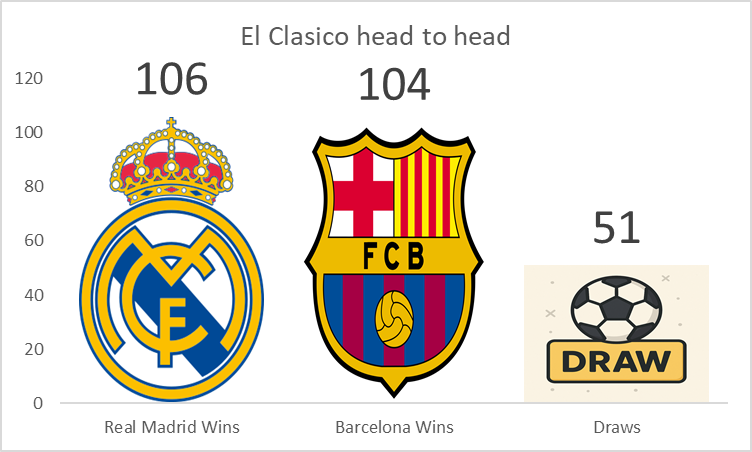
This narrow margin highlights the historical balance of power, with both clubs consistently pushing each other to their limits.
Major Trophies
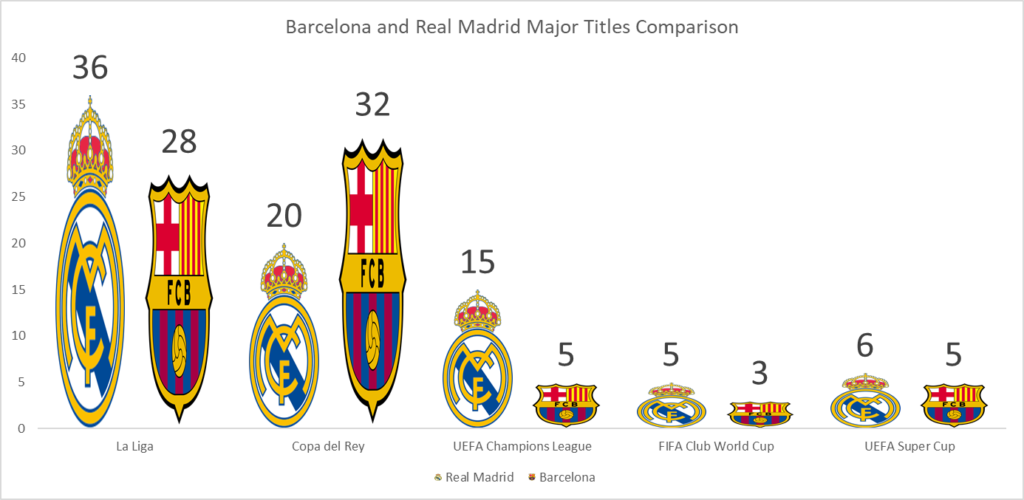
Both clubs are among the most successful in world football, boasting an impressive collection of silverware
Real Madrid holds a significant advantage in European titles, while Barcelona dominates in domestic cup competitions. This further underscores the different historical focuses and strengths of each club within El Clasico history.
Top Goalscorers in El Clásico
Individual brilliance often shines brightest in these high-stakes encounters. The top scorers list is dominated by legends:
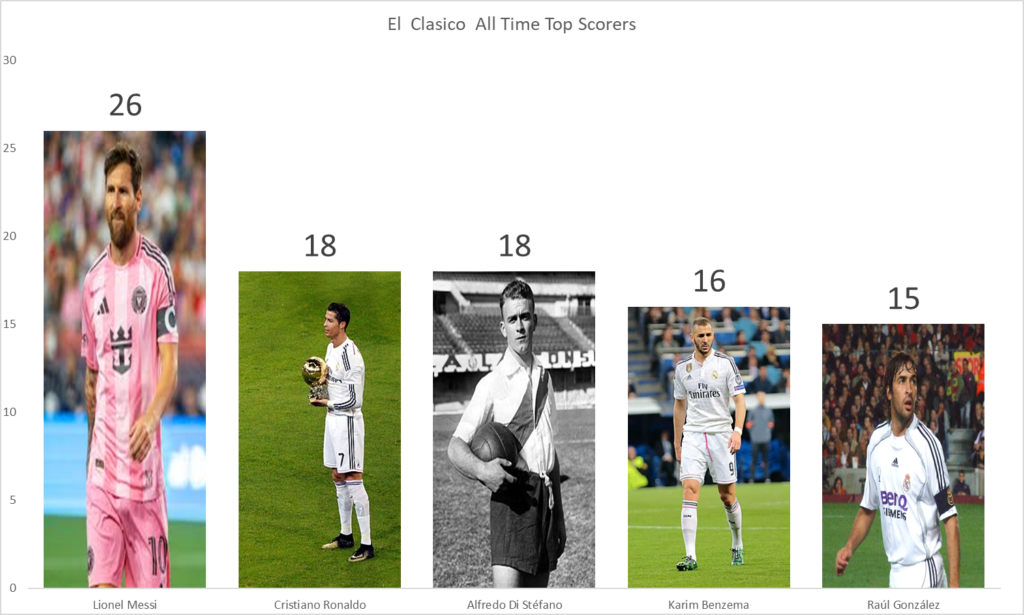
Lionel Messi”s record is particularly remarkable, showcasing his consistent impact on the biggest stage. Cristiano Ronaldo”s ability to match Di Stéfano in fewer appearances also highlights his incredible efficiency.
Most Appearances in El Clásico
Longevity and consistent performance are key to racking up El Clásico appearances:
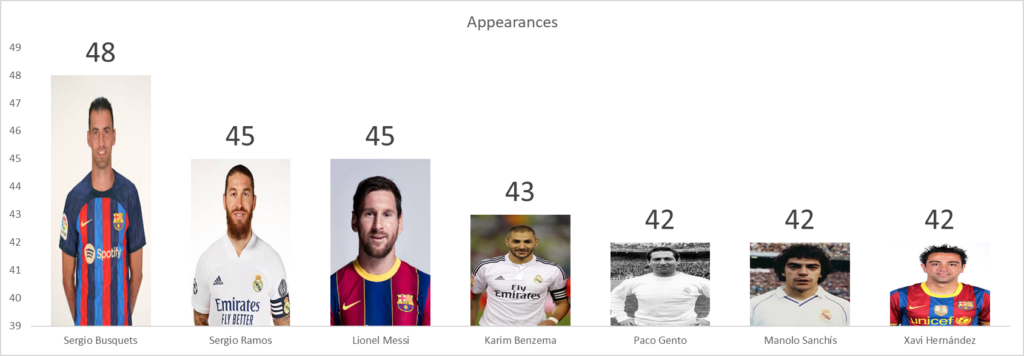
These players represent the heart and soul of their respective clubs for extended periods, enduring the immense pressure of the Real Madrid vs Barcelona rivalry season after season.
Biggest Wins
- Real Madrid 11-1 Barcelona (1943): Copa del Generalísimo
- Real Madrid 8-2 Barcelona (1935): La Liga
- Barcelona 7-2 Real Madrid (1950): La Liga
- Barcelona 6-1 Real Madrid (1957): Copa del Rey
- Barcelona 5-0 Real Madrid (1935, 1974, 1994, 2010, 2018): La Liga
- Real Madrid 5-0 Barcelona (1953, 1995): La Liga
These record-breaking scorelines are etched into the memory of fans and continue to be referenced when discussing moments of ultimate dominance in El Clasico history.
The Modern Era
The 21st century has seen the Real Madrid vs Barcelona rivalry reach unprecedented global heights, driven by superstar players, tactical innovations, and relentless competition. This period has solidified El Clásico”s status as the world”s most watched club football match.
The Messi vs. Ronaldo Era (2009-2018)
The arrival of Cristiano Ronaldo at Real Madrid in 2009 ushered in arguably the most iconic period of the rivalry. The individual battle between Lionel Messi and Ronaldo became a defining narrative, pushing both players and their respective teams to new levels of excellence. Their duels were the stuff of legend, creating an era of unparalleled interest in El Clasico history.
- Unprecedented Goalscoring: Both players consistently scored crucial goals, often directly against each other, setting records and captivating audiences worldwide.
- Tactical Masterclasses: This era also featured intense tactical battles, particularly between Pep Guardiola”s Barcelona and José Mourinho”s Real Madrid, leading to some of the most memorable and high-quality matches.
- Global Brand Expansion: The superstar power of Messi and Ronaldo, combined with the clubs” global marketing efforts, transformed El Clásico into a truly global sporting event, reaching billions of viewers.
Post-Messi/Ronaldo Dynamics
Since the departure of Cristiano Ronaldo in 2018 and Lionel Messi in 2021, the rivalry has entered a new phase. While the individual superstar magnetism might have diminished slightly, the intensity and historical weight of the fixture remain undimmed.
- Emergence of New Stars: Players like Vinicius Jr., Jude Bellingham, Rodrygo, and Pedri have stepped up, becoming the new faces of their respective clubs and bringing fresh energy to the rivalry.
- Financial and Sporting Challenges: Both clubs have faced significant financial and sporting challenges, particularly Barcelona. This has led to periods of rebuilding and a more open, less predictable dynamic in the league.
- Recent Encounters and Upper Hand: In the immediate aftermath of Messi”s departure, Real Madrid seemed to gain a slight upper hand, particularly in league encounters. However, Barcelona has shown resilience, securing important victories, including a dominant 4-0 win at the Bernabéu in March 2022 and winning the 2023 Supercopa de España final against Real Madrid. Real Madrid, however, secured a crucial 3-2 victory in April 2024, effectively sealing the La Liga title, demonstrating their continued strength.
The tactical approaches remain diverse. Real Madrid often relies on individual brilliance, swift transitions, and a strong midfield, while Barcelona typically aims for possession-based football and intricate passing plays. The unpredictability of these encounters, even without the two greatest players of their generation, continues to thrill fans.
The Future of the Rivalry
As football evolves, so too does El Clásico. Yet, its fundamental appeal and significance show no signs of waning. The future of the Real Madrid vs Barcelona rivalry promises to be as captivating as its storied past.
New Generations of Talent
Both clubs are constantly investing in and developing world-class talent. The next generation of superstars, like Real Madrid”s Vinicius Jr., Jude Bellingham, and Endrick, and Barcelona”s Pedri, Gavi, and Lamine Yamal, are already making their mark. Their individual battles and team dynamics will define the next chapter of El Clasico history.
The academies of La Masia and La Fábrica continue to produce exceptional players, ensuring a steady stream of talent deeply ingrained in the club”s philosophy and rivalry. This continuous supply of home-grown stars guarantees that the passion for the derby will be passed down through generations.
Continued Global Appeal and Commercial Growth
El Clásico”s global brand is stronger than ever. The clubs” vast international fan bases, combined with modern media and digital platforms, ensure that the rivalry will continue to be a global spectacle. Pre-season tours and international fixtures also serve to expand the rivalry”s reach.
Commercially, El Clásico remains one of the most lucrative matches in sports, attracting huge sponsorship deals and broadcast revenues. This financial power allows both clubs to continue competing for the world”s best players, ensuring the quality of the rivalry remains at the highest level.
Enduring Political and Social Relevance
While the political landscape of Spain may shift, the underlying regional identities and historical narratives represented by Real Madrid and Barcelona are deeply ingrained. These cultural elements will continue to add a unique layer of intensity and meaning to every encounter.
The rivalry will adapt to new social issues and technological advancements, but its core essence – a fierce competition between two giants representing distinct identities – will remain. It will continue to be a mirror reflecting broader societal dynamics in Spain.
Conclusion
The El Clásico, the epic Real Madrid vs Barcelona rivalry, is truly “Més que un partit” – more than a match. It is a living, breathing testament to the power of football to encapsulate history, culture, and human emotion. From the political tensions of its origins to the legendary clashes of Di Stéfano, Cruyff, Messi, and Ronaldo, El Clasico history is a tapestry woven with moments of unparalleled drama, controversy, and sporting brilliance.
This rivalry has consistently pushed the boundaries of football, producing some of the sport”s most iconic matches and defining the careers of countless legends. Its cultural and social impact extends far beyond the pitch, shaping identities and reflecting the complex narratives of Spain itself.
As new generations of players emerge and the dynamics of modern football evolve, one thing remains constant: the unwavering intensity and global fascination with El Clásico. It is a rivalry built on deep-seated historical animosity, fueled by sporting excellence, and celebrated by billions. El Clásico will continue to be the benchmark for football rivalries, a timeless spectacle that reminds us why we love the beautiful game.

