
Few football rivalries ignite the passion and divide a city quite like “El Derbi Madrileño.” The clash between Atlético Madrid and Real Madrid is more than just a game; it’s a battle for the soul of Spain’s capital. This deep-seated animosity, rich in cultural undertones and historic moments, defines the very essence of Spanish football.
From the opulent grandeur of the Santiago Bernabéu to the fervent atmosphere of the Cívitas Metropolitano, these two clubs represent contrasting philosophies and identities. Understanding the Madrid Derby history means delving into a narrative woven with triumph, heartbreak, and an unyielding desire for supremacy.
Image source: here
The Introduction: A City Divided by Football
Imagine a city where families, friends, and neighbors are split down the middle, not by politics or religion, but by the allegiance to a football club. This is the reality in Madrid whenever Atlético and Real face off. The derby is a cultural phenomenon that transcends the ninety minutes on the pitch.
It’s a contest of wills, a test of character, and a display of raw emotion from two sets of fiercely loyal supporters. For decades, the Madrid Derby has captivated audiences worldwide, offering a dramatic spectacle of skill, tactical prowess, and intense rivalry. This enduring conflict is a cornerstone of global football.
Origins of the Rivalry: Roots in the Capital
The tale of the Madrid Derby begins in the early 20th century, with the foundation of both clubs. Their initial paths, though intertwined by geography, quickly diverged, laying the groundwork for a rivalry that would last over a century.
Real Madrid: The Royal “Establishment”
Real Madrid, founded in 1902 as Madrid Football Club, quickly gained prominence. Its “Real” (Royal) title was bestowed by King Alfonso XIII in 1920, solidifying its image as the club of the monarchy and the establishment. Historically, they were perceived as the team of power, success, and the ruling class.
Their early dominance in Spanish football, particularly after the Spanish Civil War and during the Franco regime, further cemented this image. While the exact extent of Franco’s direct support is debated by historians, the perception of Real Madrid as the regime’s team became a powerful part of the rivalry’s narrative, especially for Atlético fans.
Atlético Madrid: The “Rebel” & Working-Class Roots
Atlético Madrid’s origins are slightly different. Founded in 1903 by Basque students in Madrid as a branch of Athletic Club de Bilbao, they initially wore the same blue and white colors. After the Civil War, they merged with the Spanish Air Force’s team, becoming Atlético Aviación, adopting the now-iconic red and white stripes.
Atlético has often been associated with working-class neighborhoods and a more humble, rebellious spirit. They embraced the role of the underdog, fighting against the perceived might and privilege of their city rivals. This “us against the world” mentality has become a core part of their identity and fan culture.
Cultural & Social Impact: More Than Just Football
The Madrid Derby extends far beyond the confines of the football pitch. It’s ingrained in the social fabric of the city, influencing daily conversations, family dynamics, and even urban landscapes. The rivalry is a powerful expression of identity for millions.
A City Divided by Colors
Madrid visually transforms in the days leading up to a derby. Red and white flags adorn balconies in one neighborhood, while pristine white banners wave proudly in another. The city’s streets become a canvas for passionate declarations of loyalty, reflecting the deep emotional investment of both fan bases.
For many, choosing a side is a generational tradition, passed down through families. It creates an interesting dynamic where a household might contain both Real and Atlético supporters, leading to playful banter or tense silences on match days. This division is a fundamental aspect of Madrid’s unique football culture.
The “Us vs. Them” Mentality
Atlético fans often chant “¡Atleti, Atleti, Atlético de Madrid!” with a particular emphasis on the struggle, the fight, and the underdog spirit. Real Madrid supporters, conversely, exude confidence and a sense of entitlement to success, fueled by their unparalleled trophy cabinet. This contrast in ethos fuels the “us vs. them” narrative.
The rivalry also serves as an outlet for broader social commentary, even if subtly. Atlético fans might perceive Real’s success as a symbol of established power, while Real fans might view Atlético’s passionate defiance as admirable but ultimately futile. These underlying narratives add layers of complexity to the derby’s cultural significance.
Historic Matches & Moments
The Madrid Derby history is punctuated by countless memorable matches, each contributing to the rivalry’s legend. From dominant streaks to shocking upsets, these games have shaped the narrative.
Defining Encounters
Pre 2000
- 1959 European Cup Semi-Final: The First European Clash
Real Madrid defeated Atlético in a replay after a 2-2 aggregate draw, marking their first European encounter. This set the tone for Real’s early continental dominance. - 1960 Copa del Rey Final: Atlético’s Bernabéu Triumph
Atlético achieved a historic 3-2 victory over Real Madrid at their rivals’ home ground, the Santiago Bernabéu. This was a massive statement of intent from the Rojiblancos, breaking Real’s dominance. - 1995-96 La Liga Double: Atlético’s Golden Season
Under Radomir Antić, Atlético enjoyed a sensational season, winning both La Liga and the Copa del Rey. This period saw them consistently challenge Real Madrid and assert their presence at the top of Spanish football.
post 2000
- 1999-2013: Real Madrid’s Derby Dominance
For nearly 14 years, Real Madrid held an incredible unbeaten run against Atlético in La Liga, spanning 25 matches. This period was a source of immense frustration for Atlético fans and a point of pride for Real. - 2013 Copa del Rey Final: The End of the Curse
Atlético finally broke their long derby hoodoo, defeating Real Madrid 2-1 in extra time at the Santiago Bernabéu to win the Copa del Rey. This victory, under Diego Simeone, was a watershed moment, signaling a shift in the rivalry’s dynamics. - 2014 UEFA Champions League Final: Agony in Lisbon
Perhaps the most heartbreaking moment in Atlético’s history. Leading 1-0 in injury time, Sergio Ramos’s header forced extra time, where Real Madrid eventually won 4-1 to claim “La Décima.” - 2016 UEFA Champions League Final: Milan Heartbreak Again
Just two years later, the two sides met again in the Champions League final. Real Madrid triumphed once more, this time in a penalty shootout after a 1-1 draw. The pain for Atlético was palpable, underscoring Real’s European dominance. - 2015 La Liga: Atlético’s 4-0 Thrashing
In a memorable league encounter, Atlético delivered a stunning 4-0 defeat to Real Madrid at the Vicente Calderón. This was one of the most emphatic derby wins for the Rojiblancos in recent memory, showcasing Simeone’s tactical mastery.
Legendary Players & Managers: Defining the Rivalry
The Madrid Derby has been graced by some of football’s most iconic figures, whose performances and legacies are forever intertwined with this fierce rivalry. These individuals not only shaped their clubs but also etched their names into the derby’s rich tapestry.
Real Madrid Icons
- Alfredo Di Stéfano: The legendary “Blond Arrow” was instrumental in Real Madrid’s early European dominance, scoring numerous derby goals and setting a standard of excellence.
- Raúl González: A symbol of Real Madrid’s homegrown talent, Raúl’s passion and goal-scoring prowess made him a derby hero, often celebrating with fierce intensity.
- Cristiano Ronaldo: Real Madrid’s all-time top scorer in the derby, Ronaldo’s clinical finishing and big-game mentality were often the difference-maker in crucial encounters.
- Sergio Ramos: The iconic defender, known for his leadership and crucial goals, especially in the Champions League finals against Atlético, embodies Real’s never-say-die attitude.
- Zinedine Zidane: As a player, his elegance graced the derby. As a manager, he led Real Madrid to two Champions League final victories over Atlético, cementing his legendary status.
Atlético Madrid Legends
- Luis Aragonés: “El Sabio de Hortaleza” (The Sage of Hortaleza) was a player, manager, and the spiritual heart of Atlético Madrid. He remains their all-time top scorer in the derby and embodied the club’s fighting spirit.
- Paulo Futre: The Portuguese winger’s dazzling skill and flair provided moments of magic for Atlético in the late 1980s and early 1990s, often giving Real Madrid defenders nightmares.
- Fernando Torres: “El Niño” was the local boy who lived the Atlético dream. His emotional return and goals against Real Madrid resonated deeply with the Rojiblanco faithful.
- Diego Simeone: As a player, he brought intensity and a winning mentality. As a manager, he transformed Atlético, making them genuine title contenders and breaking Real’s derby dominance, albeit with European heartbreak.
- Antoine Griezmann: A modern icon, Griezmann’s goal-scoring and creative brilliance have been vital for Atlético in recent years, often shining in big derby matches.
Players Who Crossed the Divide
A select few have dared to cross the Madrid divide, often to the ire of one set of supporters. Hugo Sánchez, a prolific striker, moved from Atlético to Real Madrid in 1985, becoming a legend at the Bernabéu. Bernd Schuster also played for both, as did Santiago Solari, adding another layer of intrigue to the rivalry’s narrative.
Statistics & Records: The Numbers Game
While passion fuels the rivalry, statistics provide a cold, hard look at the head-to-head battle. These numbers underscore Real Madrid’s historical dominance, but also highlight Atlético’s growing challenge in the modern era.
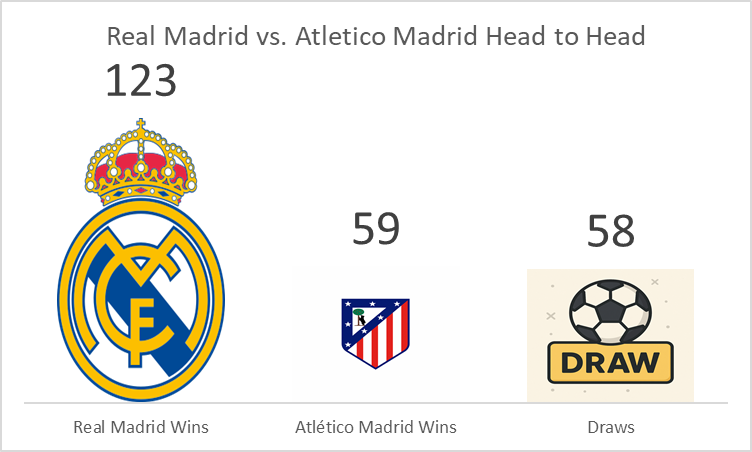
Head-to-Head Record (Competitive Matches – as of early 2024)
The Madrid Derby has been contested in various competitions, including La Liga, Copa del Rey, Supercopa de España, and the UEFA Champions League. The overall record generally favors Real Madrid significantly.
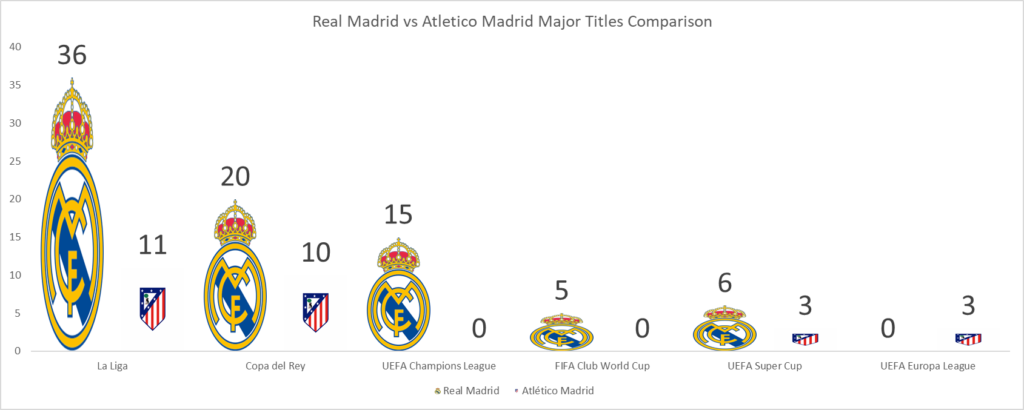
Major Trophy Count (as of early 2024)
This is where Real Madrid’s historical supremacy is most evident, particularly in European competitions.
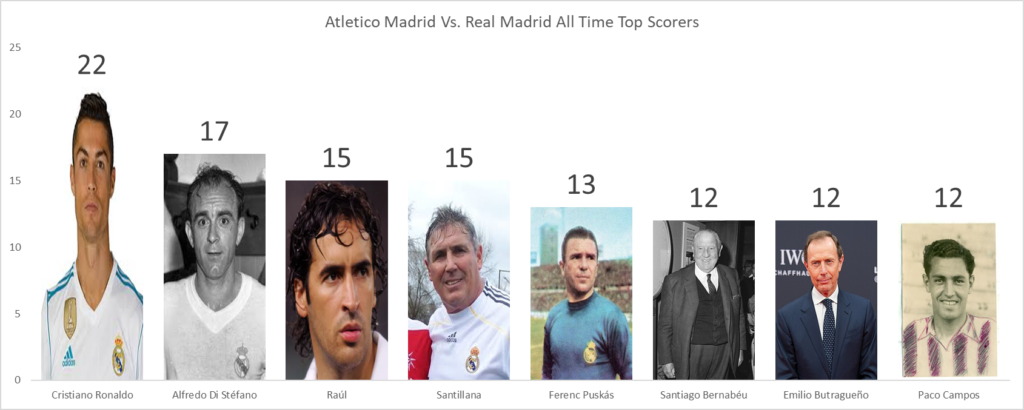
Top Scorers in the Madrid Derby
Certain players have a knack for finding the net in these high-stakes encounters.
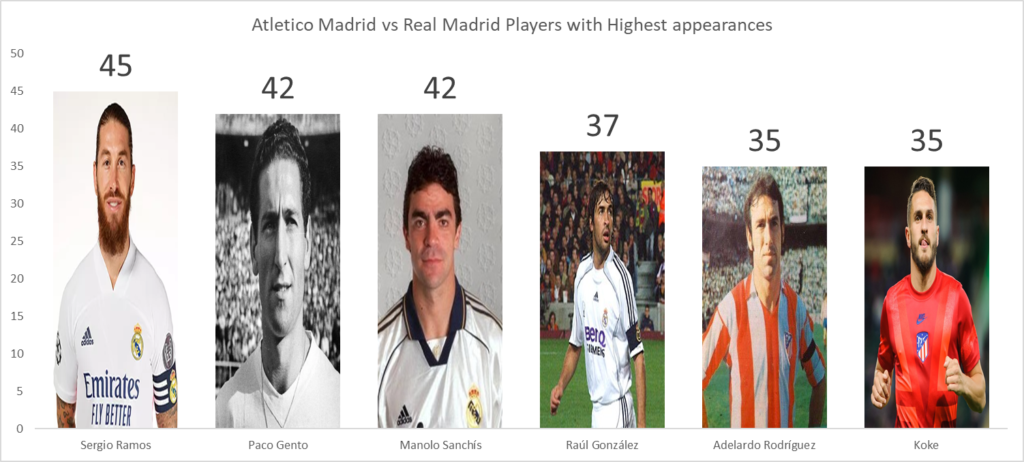
Most Appearances
Durability and consistency are key to featuring in so many derbies.
The Modern Era: A Renewed Rivalry
The 21st century has breathed new life into the Madrid Derby history, largely thanks to one man: Diego Simeone. His arrival at Atlético Madrid in 2011 marked a turning point, transforming the Rojiblancos from an inconsistent side into a European powerhouse.
Simeone’s Impact: The “Cholismo” Revolution
Under Simeone, Atlético developed a distinct identity defined by tactical discipline, defensive solidity, relentless work rate, and an unyielding fighting spirit – often dubbed “Cholismo.” This philosophy allowed them to compete with, and often overcome, the financial might and individual brilliance of Real Madrid.
Simeone’s Atlético broke Real Madrid’s long derby unbeaten streak in 2013 and went on to win La Liga in 2014 and 2021, directly challenging Real’s domestic supremacy. The tactical battles between Simeone’s organized defense and Real Madrid’s free-flowing attack became a fascinating subplot of the rivalry.
Recent Encounters & Shifting Dynamics
While Real Madrid still holds the upper hand in overall head-to-head records and European trophy counts, Atlético’s competitiveness has intensified the rivalry considerably. Recent derbies are often cagey affairs, decided by fine margins or moments of individual brilliance.
The modern derby has seen more balanced results, with Atlético securing significant wins, particularly in La Liga. However, Real Madrid has continued its dominance in the most high-stakes European clashes, delivering painful blows to Atlético’s Champions League aspirations.
For example, in recent seasons (2022-2024), matches have been tight: Real Madrid often edges out Atlético in the league or cups, but Atlético has also secured crucial victories, especially at home. The tactical chess match remains central, with Real Madrid often relying on individual quality and Atlético on collective strength.
The Future of the Rivalry: Enduring Significance
The Madrid Derby shows no signs of losing its intensity. As both clubs continue to evolve, investing in world-class talent and tactical innovation, the rivalry is poised for many more thrilling chapters.
Emerging Talents & New Eras
Both clubs consistently bring in and develop top young players. The performances of future stars will undoubtedly shape the next decade of derby history. As veteran legends retire, new heroes will emerge to carry the mantle of this intense rivalry. The tactical battle between managers will also continue to be a fascinating aspect.
The financial disparity between the clubs, while still present, has been somewhat mitigated by Atlético’s shrewd management and strong identity. This allows for sustained competition, ensuring that the derby remains a truly unpredictable and captivating spectacle.
Global Appeal & Continued Stakes
The Madrid Derby’s global reach continues to grow, attracting millions of viewers worldwide. Its significance extends beyond Spain, making it a must-watch event on the international football calendar. Whether it’s a league encounter, a Copa del Rey clash, or another potential Champions League showdown, the stakes remain incredibly high.
The psychological impact of winning or losing a derby can often ripple through a team’s entire season. For the fans, bragging rights in the capital are priceless, ensuring that every encounter is treated with the utmost importance.
Conclusion: The Enduring Legacy of El Derbi Madrileño
The Madrid Derby history is a captivating narrative of two clubs, two philosophies, and one city forever bound by football. From its early origins rooted in social distinctions to its modern-day intensity, the rivalry between Atlético Madrid and Real Madrid is a testament to the enduring power of sport.
It’s a story of glorious victories, crushing defeats, legendary figures, and unwavering fan loyalty. While Real Madrid holds the historical advantage in terms of trophies and head-to-head records, Atlético’s recent resurgence has injected a renewed vigor and competitiveness, ensuring that the derby remains one of football’s most compelling spectacles.
As the years pass, the specific players and managers may change, but the raw emotion, the fierce competition, and the deep-seated pride of the Madrid Derby will undoubtedly continue to captivate generations of football fans. It is, and always will be, more than just a game; it is the heartbeat of Madrid.

