
Football rivalries are the lifeblood of the beautiful game. They fuel passion, ignite stadiums, and etch unforgettable moments into history. Among Spain’s many compelling derbies, the clash between Valencia CF and Villarreal CF, often dubbed the Valencian Derby or “Derbi de la Comunitat”, stands as a fascinating testament to regional pride and sporting ambition.
This isn’t a rivalry born of ancient grudges or deeply entrenched political divides. Instead, the Valencia vs Villarreal rivalry is a relatively modern phenomenon. It emerged from Villarreal’s meteoric rise to prominence in the late 20th and early 21st centuries. This ascent challenged Valencia’s long-held status as the undisputed footballing giant of the Valencian Community.
For decades, Valencia CF reigned supreme. They were the region’s flagship club, a consistent force in La Liga and Europe. Villarreal, a club from a much smaller city, began its journey to the top with significant investment and shrewd management. Their success inevitably led to direct competition, creating a vibrant and often fierce contest for local bragging rights and national recognition.
This post delves deep into the heart of the Valencia vs Villarreal rivalry. We will explore its origins, cultural impact, and the legendary figures who have shaped its narrative. We will also analyze the statistics, recount historic matches, and look at the modern dynamics that continue to define this compelling regional derby in La Liga.
Origins of the Rivalry
The roots of the Valencia vs Villarreal rivalry are unlike many other Spanish derbies. It is not an “old money” versus “new money” narrative in the traditional sense, but rather a story of an established powerhouse facing a rapidly ascending challenger.
Valencia CF: The Established Giant
Valencia Club de Fútbol, founded in 1919, has a rich and storied history. They have traditionally been one of Spain’s most successful clubs, boasting multiple La Liga titles, Copa del Rey triumphs, and European honours. Based in the capital city of the Valencian Community, Valencia CF has always represented the region’s footballing pinnacle. Their home, the Mestalla, is an iconic stadium, steeped in tradition and legendary moments. For generations, supporting Valencia was synonymous with supporting the region’s premier club.
Villarreal CF: The Yellow Submarine’s Ascent
Villarreal Club de Fútbol, founded in 1923, remained a relatively modest club for much of its existence. They spent decades toiling in the lower divisions of Spanish football. The club’s fortunes dramatically changed in the late 1990s with the investment of local businessman Fernando Roig. His ambition and financial backing transformed Villarreal. They achieved promotion to La Liga for the first time in 1998, a pivotal moment that set the stage for future clashes.
Roig’s vision was clear: to build a competitive team capable of challenging the established order. Villarreal quickly became known for its attractive, possession-based football and its ability to scout and develop talent. This rapid rise from a provincial club to a genuine La Liga contender, and later a European force, inevitably brought them into direct conflict with Valencia. The geographic proximity, with Villarreal being just 60km north of Valencia city, further intensified this burgeoning sporting rivalry.
Cultural & Social Impact
The Valencian Derby rivalry extends far beyond the ninety minutes on the pitch. It deeply impacts the cultural and social fabric of the region, creating a unique dynamic between two distinct footballing identities.
Regional Pride and Identity
At its core, the rivalry is a battle for regional supremacy. Valencia CF, representing the bustling capital, carries the weight of history and the expectations of a large metropolitan fanbase. Their supporters often view themselves as the rightful custodians of Valencian footballing heritage. Villarreal, on the other hand, represents a smaller, more intimate community. Their success is a source of immense pride for the town of Villarreal, showcasing that a club from a modest background can compete with the giants.
This dynamic creates a fascinating “big city vs. small town” narrative. Valencia fans often see Villarreal as an upstart, a club without the same history or fanbase. Villarreal supporters, conversely, revel in their underdog status. They take immense satisfaction in challenging and often outperforming their more illustrious neighbours. This fuels passionate discussions in bars, workplaces, and homes across the Valencian Community.
Fan Traditions and Atmosphere
Matchdays for the Valencian Derby are vibrant affairs. Both sets of fans bring immense energy and colour to the stadiums. The Mestalla, with its steep stands, creates an intimidating atmosphere for visiting teams. When Villarreal visits, the chants and banners often directly reference the regional rivalry, with playful jabs exchanged between the two sets of supporters.
Similarly, when Valencia travels to the Estadio de la Cerámica (formerly El Madrigal), Villarreal’s fans, though fewer in number, are known for their vociferous support. The “Yellow Submarine” nickname is embraced with enthusiasm, and the stadium often becomes a cauldron of noise. While generally respectful, the rivalry is intense. It is marked by a palpable tension that makes these fixtures some of the most anticipated on the La Liga calendar for local fans.
Historic Matches & Moments
Over the years, the Valencia vs Villarreal rivalry has delivered numerous memorable encounters. These matches have often been pivotal, shaping league standings, European qualification, and regional bragging rights.
Early Encounters and Villarreal’s Ascent
One of the earliest significant derbies came in the 2002-03 season. Villarreal, then a relatively new face in the top flight, stunned Valencia with a 2-1 victory at the Mestalla. This result was a clear signal that the Yellow Submarine was no longer just making up the numbers. They were a serious threat. These early wins against the established powerhouse helped solidify Villarreal’s belief and ignite the competitive spark.
The 2003-04 season was another key period. Valencia, under Rafael Benítez, went on to win La Liga. However, Villarreal also enjoyed a strong season, qualifying for Europe. Matches between the two were fiercely contested. They often showcased the tactical battle between Benítez’s pragmatic Valencia and Villarreal’s emerging attacking flair. These games were frequently tight, low-scoring affairs, decided by moments of individual brilliance or defensive solidity.
Iconic Derbies and High Stakes
The Valencian Derby truly escalated when both teams began regularly competing for European places. A particularly dramatic encounter occurred in the 2007-08 season. Villarreal, under Manuel Pellegrini, finished second in La Liga, their highest-ever finish, while Valencia struggled. The direct clashes were intense, with Villarreal often getting the upper hand, further fueling their fans’ belief that they had truly arrived.
Another classic was the 4-2 victory for Valencia at the Mestalla in the 2009-10 season. This match featured a captivating attacking display from Valencia, demonstrating their capacity for high-scoring games. Conversely, a 2-0 Villarreal win at home in the 2010-11 season was crucial for their European aspirations, highlighting their resilience against their neighbours.
More recently, the 2018-19 season saw a thrilling 3-0 victory for Valencia at the Mestalla, where they dominated Villarreal. This result was significant as Valencia went on to win the Copa del Rey that season. These matches are rarely dull. They are often characterized by high intensity, tactical battles, and occasional moments of controversy that only add to the derby’s allure.
Legendary Players & Managers
The Valencia vs Villarreal rivalry has been graced by numerous talented individuals. Both players and managers have left their indelible mark on this regional derby, defining its character and intensity.
Key Figures for Valencia CF
- David Villa: “El Guaje” was a prolific striker for Valencia. His pace, skill, and clinical finishing were often decisive in derby matches. He consistently delivered crucial goals, earning him legendary status among the Mestalla faithful.
- David Silva: The diminutive midfielder’s vision and passing ability were central to Valencia’s attacking play. He orchestrated many moves that led to goals against Villarreal, showcasing his class on the big stage.
- Rubén Baraja: A midfield general, Baraja’s leadership and goal-scoring prowess from central midfield were vital. He embodied the fighting spirit of Valencia and was often at the heart of their best performances in the derby.
- Santiago Cañizares: The iconic goalkeeper was a commanding presence between the posts. His experience and big-game temperament were crucial in many tight derby encounters, often pulling off spectacular saves.
Key Figures for Villarreal CF
- Juan Román Riquelme: The Argentine playmaker was the undisputed “magician” for Villarreal. His incredible vision, passing range, and ability to control the tempo of a game often made him the difference-maker against Valencia.
- Diego Forlán: The Uruguayan striker formed a formidable partnership with Riquelme. His clinical finishing and relentless work rate made him a constant threat. He scored important goals in several derbies.
- Marcos Senna: The naturalized Spanish international midfielder was the engine room of Villarreal. His defensive solidity, ball-winning ability, and powerful long-range shots were pivotal in establishing Villarreal as a top La Liga side.
- Santi Cazorla: A fan favourite, Cazorla’s silky skills, dribbling, and ability to play across the midfield were a joy to watch. He returned for a second spell, continuing to inspire the Yellow Submarine against their rivals.
- Gerard Moreno: In the modern era, Moreno has been Villarreal’s talisman. His consistent goal-scoring and leadership have been crucial in recent derbies, often being the difference-maker.
Managers Who Crossed the Divide
One notable figure who has managed both clubs is Unai Emery. He achieved significant success with Valencia, leading them to multiple Champions League qualifications. Later, he took the helm at Villarreal, guiding them to a historic Europa League title. This unique perspective adds another layer to the rivalry, as managers often carry the expectations and pressures of both fanbases.
Statistics & Records
Analyzing the numbers provides a clear picture of the historical ebb and flow of the Valencia vs Villarreal rivalry. While Valencia holds the historical advantage, Villarreal has significantly closed the gap, especially in recent decades.
Head-to-Head Record
As of september 2025, the two clubs have met approximately 60 times in competitive fixtures, primarily in La Liga. The overall head-to-head record typically stands as follows:
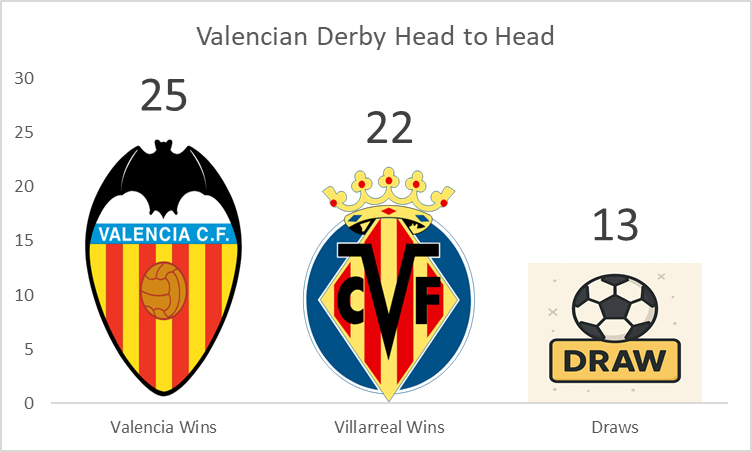
This statistical analysis shows that Valencia historically has the edge, particularly due to their dominance in the early years before Villarreal became a consistent top-flight team. However, Villarreal’s rise has seen them significantly improve their record against their neighbours, making the derby much more balanced in the 21st century.
La Liga Specifics
In La Liga alone, the trend is similar. Valencia maintains a slight advantage in terms of wins. However, Villarreal has often performed strongly at home against Valencia, making the Estadio de la Cerámica a difficult ground for Los Che to visit.
- Highest Scoring Match: While exact scores vary, matches like Valencia’s 5-0 victory in 2011 or Villarreal’s 4-1 win in 2020 stand out as high-scoring affairs, though typically the derby is a tighter contest.
- Biggest Win Margins: Valencia has recorded larger victory margins in some of their dominant periods, but Villarreal has also inflicted heavy defeats, particularly during periods of Valencia’s struggles.
Trophy Cabinet Comparison
When it comes to silverware, Valencia CF’s long history gives them a significant lead:
- Valencia CF:
- La Liga: 6 titles
- Copa del Rey: 8 titles
- Supercopa de España: 1 title
- UEFA Cup Winners’ Cup: 1 title
- UEFA Cup: 1 title
- UEFA Super Cup: 2 titles
- Inter-Cities Fairs Cup: 2 titles
- Villarreal CF:
- UEFA Europa League: 1 title (2020-21)
- UEFA Intertoto Cup: 2 titles
This comparison starkly highlights Valencia’s historical dominance in terms of major trophies. However, Villarreal’s Europa League triumph in 2021 was a monumental achievement, marking their first major European honour and a significant milestone in their club’s history. It also gave them a European trophy that Valencia had not won (the Europa League in its current format).
The Modern Era
The contemporary landscape of the Valencia vs Villarreal rivalry is shaped by recent form, financial realities, and the evolving ambitions of both clubs. The dynamics have shifted, making the derby as unpredictable as ever.
Shifting Fortunes and Financial Realities
In recent years, Valencia CF has faced significant financial challenges, leading to periods of instability on and off the pitch. This has often resulted in player sales and a struggle to consistently compete at the very top of La Liga. Their focus has often been on managing resources and developing youth talent, making their path more challenging.
Villarreal, while not immune to financial pressures, has generally maintained a more stable and consistent project. Their prudent management, strong scouting network, and ability to attract and retain key players have allowed them to remain a competitive force, often challenging for European qualification. This has led to periods where Villarreal has arguably been the more consistently successful club in the region.
Recent Encounters and Tactical Trends
Recent derbies have continued to be hotly contested. Matches are often tactical affairs, with both teams showing a desire to control possession and exploit weaknesses. Villarreal, under various managers, has often favoured a more possession-based, attacking style. Valencia, depending on their coach, has sometimes adopted a more counter-attacking or defensively solid approach, particularly when playing away.
For example, in the 2022-23 season, Villarreal secured a crucial 2-1 victory at home against Valencia, with goals coming from set pieces and quick transitions. This highlighted their ability to capitalize on key moments. Conversely, Valencia has also managed to snatch important points, often through grit and determination, reflecting the spirit of the derby.
The intensity remains undiminished. While the stakes might sometimes be different (e.g., Valencia fighting relegation vs. Villarreal fighting for European spots), the desire to win the derby is always paramount for both sets of players and fans. This ensures that every encounter is a must-watch event for followers of La Liga.
The Future of the Rivalry
What does the future hold for the Valencia vs Villarreal rivalry? The dynamics are constantly evolving, but the passion and significance of the derby are set to endure.
Maintaining Relevance in La Liga
Both clubs face the challenge of consistently competing in an increasingly competitive La Liga. Valencia will be keen to overcome its financial hurdles and reclaim its position as a consistent top-four contender. Re-establishing their dominance would certainly intensify the rivalry, as it would mean more direct competition for Champions League places.
Villarreal, meanwhile, aims to solidify its status as a regular European participant. Their goal is to continue their impressive track record of developing talent and making shrewd signings. If both clubs can achieve their respective ambitions, the derby will only grow in importance, with more high-stakes encounters on the horizon.
Emerging Talent and New Narratives
The rivalry will continue to be shaped by new generations of players and managers. Young talents emerging from both academies, such as Valencia’s Javi Guerra or Villarreal’s Álex Baena, will carry the torch of the derby. Their performances and loyalties will forge new narratives and create fresh moments of rivalry.
Tactical innovations and managerial philosophies will also play a crucial role. As new coaches arrive, they bring different approaches to the derby. This adds layers of intrigue and unpredictability to each fixture. The evolution of Spanish football means that the Valencian Derby will adapt. It will continue to provide captivating storylines and intense footballing battles for years to come.
Conclusion
The Valencia vs Villarreal rivalry is a compelling narrative within Spanish football. It beautifully encapsulates the essence of regional pride, sporting ambition, and the ever-evolving nature of competition. From Valencia’s historical grandeur to Villarreal’s ambitious rise, this derby tells a story of two clubs striving for supremacy in the same vibrant region.
While Valencia boasts a richer trophy cabinet and a longer history at the summit of Spanish football, Villarreal has carved out its own impressive legacy. They have consistently challenged the established order and even claimed a major European trophy. The head-to-head statistics reflect this journey: an initial dominance by Valencia, followed by a period of increasing balance as Villarreal established itself.
The derby is more than just a game; it is a cultural touchstone. It represents local bragging rights and a battle for identity. Legendary players and managers have etched their names into its history. From the tactical chess matches to the moments of individual brilliance, every encounter adds another chapter to this fascinating story.
As both clubs navigate the challenges and opportunities of modern football, the Valencian Derby remains a fixture marked by intense passion and fierce competition. It promises to continue delivering thrilling football and unforgettable moments for fans across the Valencian Community and beyond. The rivalry between Valencia and Villarreal is a testament to the enduring power of football to unite and divide, all in the name of the beautiful game.

